Introduction
Why Dental Implants Are the Gold Standard for Tooth Replacement
Missing teeth can have a major impact—not just on your smile, but also on your confidence, speech, ability to chew, and long-term oral health. In 2025, dental implants continue to dominate as the most advanced, natural-looking, and durable solution for tooth replacement. Whether you’ve lost a single tooth or require full-mouth rehabilitation, implants offer a permanent and aesthetically pleasing alternative to removable dentures or traditional bridges.
What sets dental implants apart is their design: they don’t just sit on your gums—they’re anchored directly into the jawbone, just like real teeth. This makes them look, feel, and function almost identically to your natural teeth. They also preserve jawbone density, maintain your facial structure, and eliminate the discomfort and instability associated with traditional dentures.
With innovations in implant technology—such as same-day implants, 3D-printed crowns, and minimally invasive techniques—this life-changing procedure is now more accessible, affordable, and pain-free than ever.
How This Guide Helps You Navigate the Process in 2025
Deciding to get dental implants is a big step, and you deserve a clear, honest roadmap. This comprehensive 2025 guide will help you:
- Understand what dental implants are and how they work
- Discover who qualifies as a good candidate
- Know the exact steps involved in getting an implant
- Compare costs, alternatives, and insurance options
- Learn about risks, aftercare, and innovations
By the end, you’ll feel empowered to make an informed decision about your dental health and choose a solution that works for your smile—and your lifestyle.
What Are Dental Implants?
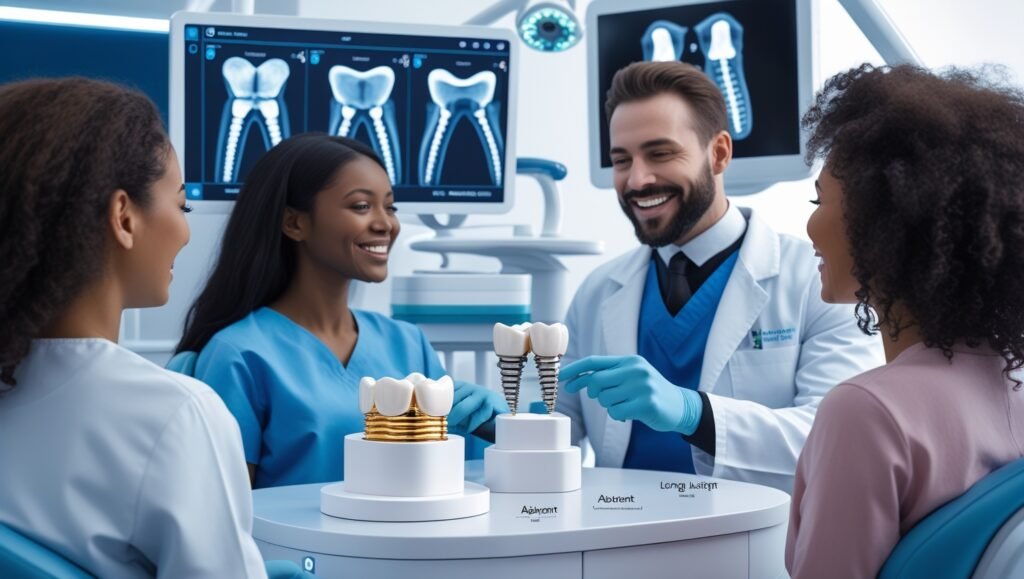
Anatomy of an Implant: Post, Abutment, and Crown
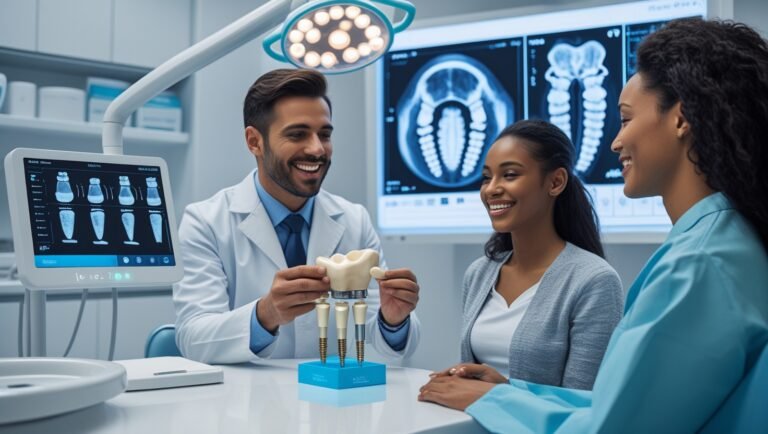
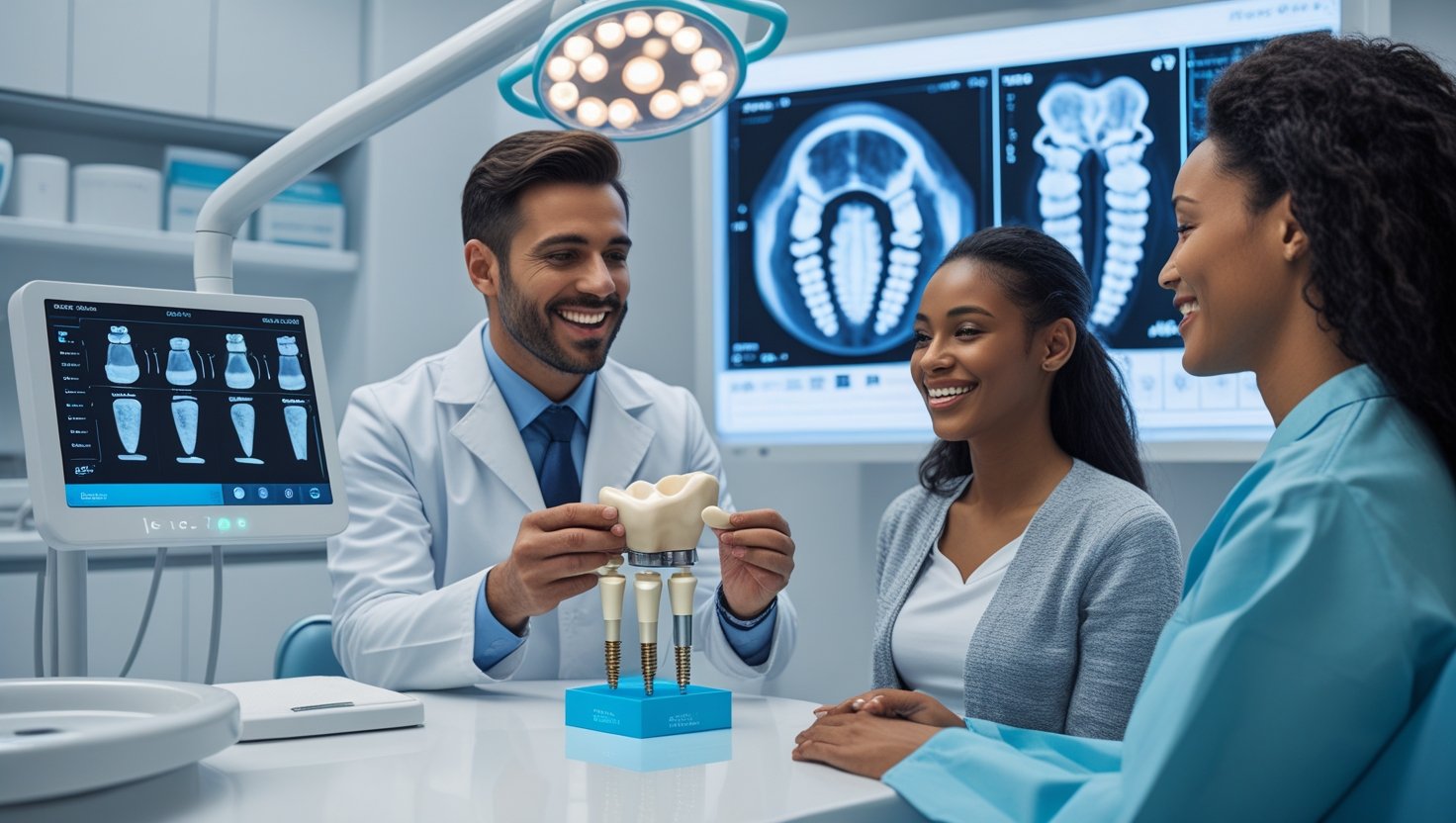
A dental implant is not just one piece—it’s a three-part system designed to mimic the structure of a natural tooth:
- Implant Post: This is a small titanium or zirconia screw surgically embedded into your jawbone. It acts as an artificial tooth root and fuses with your bone over time through a process called osseointegration.
- Abutment: Once the post is secure, a connector (the abutment) is placed on top. This holds the final crown and ensures stability.
- Crown: This is the visible part of the implant—the part that looks like a real tooth. It’s custom-made from ceramic, porcelain, or zirconia to match your natural teeth in color and shape.
In some cases, you may also need bone grafting or sinus lifts if there isn’t enough bone to support the implant.
Once complete, the implant is indistinguishable from a natural tooth—in appearance, strength, and function.
Types of Dental Implants Available Today
There’s no one-size-fits-all when it comes to implants. In 2025, patients have access to several types of dental implants, each tailored to different needs:
- Endosteal Implants: The most common type, inserted directly into the jawbone.
- Subperiosteal Implants: Placed under the gum but above the jawbone, usually for patients with minimal bone height.
- Zygomatic Implants: Used when traditional implants aren’t viable; these are anchored in the cheekbone.
- Mini Implants: Smaller, less invasive versions for narrow ridges or stabilizing dentures.
- All-on-4 / All-on-6 Systems: Support a full set of teeth on just 4 or 6 implants per arch—ideal for total tooth replacement.
Advances in 3D imaging, guided surgery, and biocompatible materials have made implants safer, faster, and more predictable than ever before.
Benefits of Dental Implants
Aesthetic and Functional Advantages
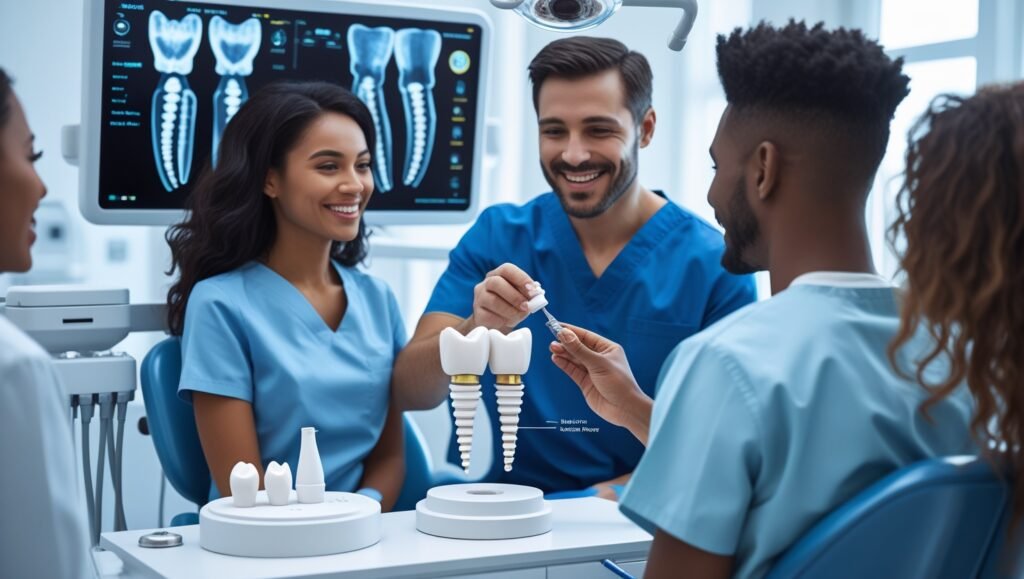
Dental implants don’t just fill a gap in your mouth—they restore confidence, function, and a sense of normalcy. Key benefits include:
- Natural appearance: Implants are customized to perfectly match your existing teeth.
- Improved speech: Unlike dentures, they don’t slip or affect your pronunciation.
- Superior chewing ability: You can eat all your favorite foods without discomfort.
- No damage to surrounding teeth: Unlike bridges, implants don’t require cutting adjacent teeth.
- Permanent solution: With proper care, implants can last 20+ years or even a lifetime.
- Low maintenance: Just brush, floss, and visit your dentist as you would with real teeth.
Patients often report that after a short adjustment period, they forget the implant isn’t a natural tooth—it looks that good and feels that seamless.
Bone Health and Longevity
One of the most important advantages of implants is their ability to preserve bone density. When a tooth is lost, the jawbone beneath it begins to deteriorate due to lack of stimulation. Over time, this can lead to a sunken facial appearance, shifting of remaining teeth, and further tooth loss.
Implants stimulate the bone just like natural tooth roots, keeping the jawbone healthy and your facial structure intact. No other tooth replacement option—neither bridges nor dentures—can offer this kind of biological benefit.
They’re also less prone to failure than alternatives. In fact, implant success rates exceed 95% with proper care, which is higher than bridges and much higher than long-term denture wearers.
Who Is a Good Candidate for Dental Implants?
Ideal Health and Dental Conditions
Most healthy adults with missing teeth can qualify for dental implants. The ideal candidate:
- Has one or more missing teeth
- Has sufficient jawbone density
- Is in good general and oral health
- Does not smoke or is willing to quit
- Has healthy gums with no untreated periodontal disease
- Is committed to oral hygiene and regular dental visits
Certain conditions, like diabetes, osteoporosis, or autoimmune disorders, may affect healing—but don’t necessarily rule you out. In 2025, advanced imaging and medical screening make it easier to assess risk and determine eligibility on a case-by-case basis.
If your jawbone is too thin, your dentist may recommend:
- Bone grafting
- Sinus lifts
- Zygomatic implants (for severe upper jaw loss)
When Alternatives May Be Better
Dental implants are amazing—but they’re not for everyone. Alternatives like bridges or dentures might be a better fit if you:
- Have severe bone loss and can’t undergo grafting
- Want a faster or more affordable solution
- Can’t stop smoking or manage underlying health risks
- Need temporary replacement for a short-term cosmetic fix
That said, many patients who were previously told they weren’t candidates are now being treated successfully thanks to modern advancements and customizable treatment plans.
The Dental Implant Procedure: Step-by-Step
Initial Consultation and Imaging
Your journey starts with a comprehensive dental exam. Your dentist or oral surgeon will:
- Take 3D CBCT scans to evaluate bone structure and nerves
- Review your medical history and current medications
- Assess your oral hygiene and gum health
- Discuss goals, costs, and potential treatment options
A customized treatment plan is then created, detailing:
- Number of implants needed
- Type of implant system
- Timeline and recovery expectations
- Whether bone grafting is necessary
Digital planning software is now widely used in 2025 to simulate implant placement and preview final results before any surgery happens.
Implant Surgery and Healing Timeline
Once cleared for surgery, here’s what to expect:
- Tooth Extraction (if needed) – Any remaining damaged teeth are removed.
- Bone Grafting (if needed) – Grafted bone takes 3–6 months to heal.
- Implant Placement – The titanium post is surgically inserted into the jawbone under local anesthesia.
- Osseointegration – Over 3–6 months, your bone fuses with the implant.
- Abutment Placement – A small connector is attached after healing.
- Crown Placement – Your custom-made crown is cemented or screwed onto the abutment.
In some cases, same-day implants are possible—especially for front teeth or when no grafting is required. However, traditional timelines still offer the highest success rates.
How Much Do Dental Implants Cost in 2025?
Price Ranges in the UK and Worldwide
One of the most common questions about dental implants is, “How much will they cost?” In 2025, the cost of dental implants can vary significantly based on geography, materials, and complexity of the case.
In the UK, average prices are:
- Single tooth implant (including crown): £2,000 – £3,500
- Implant-supported bridge: £4,500 – £7,000
- All-on-4 or full arch implants: £12,000 – £18,000 per jaw
Internationally, dental tourism continues to grow:
- Hungary, Turkey, and Poland: Single implants from £800 – £1,500
- India, Mexico, Thailand: Single implants from £500 – £1,200
While travelling abroad may save money, it’s essential to consider follow-up care, clinic reputation, and potential travel complications. Many UK clinics now offer competitive packages to match overseas prices with warranties and aftercare included.
What Affects the Cost?
Several factors influence the final cost of a dental implant procedure:
- Number of implants needed
- Type of implant system used (e.g., titanium vs zirconia)
- Bone grafting or sinus lift requirements
- Surgical complexity and duration
- Experience and location of the implant dentist
- Laboratory fees and material quality
- Final restoration type (e.g., porcelain crown, zirconia bridge)
A high-quality implant from a reputable provider is a long-term investment—saving you future costs on maintenance, discomfort, and replacements that come with cheaper solutions.
Insurance and Financing Options
What’s Covered and What’s Not
In the UK, NHS does not typically cover dental implants unless there is a medical necessity (e.g., jaw reconstruction after trauma or cancer). For most people, implants are considered cosmetic or elective, and therefore private.
However, some private dental insurance policies now offer partial reimbursements, particularly for:
- Consultations and imaging
- Surgical placement
- Crowns or prosthetic attachments
Always check the fine print—some plans cover restorative costs but not surgical placement.
Payment Plans, NHS, and Private Insurance
To make implants more accessible, many dental clinics offer:
- 0% interest payment plans over 6–12 months
- Extended credit terms with low interest
- Subscription-based care models that include routine maintenance and discounts
Some UK-based financing options include:
- Tabeo
- Chrysalis Finance
- Denplan Enhance
If you’re self-employed or a business owner, dental implants may also qualify as a medical expense on your tax returns—consult with your accountant.
Pro Tip: Ask your dentist if they offer bundle pricing for multiple implants or full-mouth restorations. Many do—and it can save you thousands.
Dental Implants vs Dentures vs Bridges
Pros and Cons of Each Option
When it comes to replacing missing teeth, three main options exist: implants, dentures, and bridges. Each comes with its pros and cons.
| Feature | Dental Implants | Dentures | Bridges |
|---|---|---|---|
| Durability | 20+ years, often lifetime | 5–8 years | 10–15 years |
| Comfort | Feels like natural teeth | May slip or irritate gums | Fixed but less natural |
| Jawbone Preservation | Yes | No | No |
| Aesthetic | Highly natural | Variable | Good |
| Speech | Clear and unaffected | May lisp or slip | Clear |
| Chewing Power | 90–100% | 25–50% | 70–80% |
| Cost (initial) | High | Low | Medium |
| Maintenance | Brush/floss like natural teeth | Daily removal and cleaning | Similar to crowns |
Which One Is Right for You?
- Choose implants if you want a permanent, natural-looking, long-term solution.
- Choose dentures if you want the most affordable, removable option and have multiple missing teeth.
- Choose bridges if you want a quicker fix and have healthy adjacent teeth to support them.
Your choice will also depend on bone density, overall oral health, and budget—but implants are considered the gold standard when health and finances allow.
Full Mouth and All-on-4 Implants
Replacing Multiple Teeth or Full Arches
For patients missing most or all of their teeth, full-mouth implants or All-on-4 systems are game-changers. Rather than placing one implant per missing tooth, this approach uses strategically placed implants to support an entire arch of prosthetic teeth.
Types include:
- All-on-4: Four implants per jaw support 10–14 fixed teeth.
- All-on-6: Offers additional stability with six implants.
- Full mouth restoration: May use 8+ implants across both jaws.
These are ideal for people who:
- Are completely edentulous (toothless)
- Suffer from loose dentures
- Have significant bone loss (often treated with angled implants)
Patients love these systems because they provide:
- Fixed, non-removable teeth
- Fast results (often within a day)
- Natural aesthetics and chewing function
- No need for adhesives or removals
How the All-on-4 Method Works
Here’s how the process typically goes:
- Consultation and scans to map out bone availability.
- Tooth extraction and implant placement (often same day).
- Temporary bridge placement while healing.
- Final prosthetic teeth attached after 3–6 months.
Recovery is generally quicker and less painful than people expect—most return to work within 2–3 days.
While All-on-4 implants cost more upfront (£12,000–£18,000 per arch), they offer an incredibly lifelike, permanent solution for total smile transformation.
Risks, Complications, and How to Avoid Them
Common Issues and Warning Signs
While dental implants boast a high success rate—over 95%—complications can still occur, especially without proper care or in high-risk individuals. Some common risks include:
- Infection at the implant site
- Nerve damage leading to numbness or tingling in the lips, gums, or chin
- Sinus problems if upper implants protrude into the sinus cavity
- Implant failure due to insufficient bone integration
- Gum recession around the implant
- Peri-implantitis, a condition similar to gum disease affecting the implant
Warning signs to watch for:
- Persistent pain or swelling weeks after surgery
- Loosening of the implant or crown
- Bad taste, pus, or signs of infection
- Unusual pressure or pain while chewing
If you notice any of these issues, contact your dentist immediately. Early detection is key to salvaging the implant or avoiding more extensive procedures.
Surgeon Qualifications and Implant Materials
The success of your dental implant largely depends on who performs the procedure. In 2025, more clinics are investing in oral surgeons, periodontists, and implantologists who have:
- Accredited implantology training
- Experience with complex cases
- Access to 3D planning software
- Use of guided surgery for precision
Ensure your provider uses FDA or CE-approved implant systems made of titanium (biocompatible and durable) or zirconia (metal-free, ideal for allergies).
Don’t be afraid to ask:
- How many implants have you placed?
- What’s your complication rate?
- Which brand of implant do you use?
A good implant dentist will welcome your questions.
Recovery and Aftercare
What to Expect After Surgery
Immediately after implant placement, some discomfort is normal. Most people experience:
- Mild swelling of the gums and face
- Bruising of the skin or gums
- Pain at the implant site
- Minor bleeding
These symptoms generally subside within a few days. Pain can be managed with:
- Over-the-counter pain relievers (e.g., ibuprofen)
- Cold compresses
- Rest and hydration
You’ll likely be on a soft food diet for the first few days and instructed to avoid:
- Smoking
- Alcohol
- Hard or chewy foods
- Strenuous exercise
Antibiotics may be prescribed to prevent infection, and you’ll return for checkups at 1 week, 1 month, and 3–6 months.
Maintaining Implant Health for Life
The long-term success of your implant depends on meticulous oral hygiene and lifestyle habits.
Tips for care:
- Brush twice daily using a soft-bristled electric brush
- Use an interdental brush or water flosser to clean around the implant
- Avoid smoking, as it dramatically increases implant failure risk
- Visit your dentist every 6 months for cleanings and exams
- Use non-abrasive toothpaste to protect implant materials
Remember: an implant can’t decay, but gum disease and bone loss can still lead to failure. Treat it with the same care as a natural tooth—if not more.
Success Rates and Longevity of Implants
Clinical Data and Real-Life Durability
Dental implants have the highest success rate of any tooth replacement option. Studies show:
- 5-year success rates: 96–98%
- 10-year success rates: 90–95%
- 20+ years is common with proper care
Compared to bridges (which last 10–15 years) and dentures (5–8 years), implants are a long-term investment in your health, appearance, and quality of life.
How Lifestyle and Habits Affect Implants
Key factors that impact the longevity of implants include:
- Smoking: Decreases blood flow, slows healing, and increases infection risk
- Diabetes: Poorly controlled diabetes raises failure rates
- Bruxism (teeth grinding): Can stress the implant and crown
- Neglected hygiene: Can lead to peri-implant disease
The good news? With regular care, many patients enjoy a lifetime of natural-looking, fully functional implants.
Innovations in Dental Implants in 2025
3D-Printed Implants and AI-Guided Surgery
In 2025, dental implants are smarter, safer, and more customized than ever. Leading innovations include:
- 3D-printed implants and crowns: Custom designed for a perfect fit, often made same-day
- AI-guided implant planning: Helps dentists map nerves, blood vessels, and bone thickness with incredible accuracy
- Digital impressions: No more messy molds—digital scans are more accurate and faster
These technologies reduce surgery time, speed up recovery, and increase success rates—especially for complex or full-arch restorations.
Biocompatible Materials and Smart Sensors
Today’s implants are made with advanced materials like:
- Zirconia: Metal-free, ideal for aesthetic and allergy-sensitive cases
- Titanium alloy: Lightweight, strong, and integrates well with bone
There’s also a push for smart implants with built-in sensors that can:
- Monitor bite force
- Detect early signs of implant stress or failure
- Send real-time data to your dentist via mobile app
This is the future of proactive, high-tech dentistry.
How to Choose the Right Implant Dentist
What to Look for in a Provider
Choosing the right professional is the single most important factor in the success of your dental implant. Here’s what to look for:
- Accreditation in implantology
- Experience with hundreds of successful placements
- Access to advanced imaging and digital planning tools
- A clean, modern facility with positive patient reviews
- Transparent pricing and warranty details
- Willingness to explain your options clearly
Don’t settle for the cheapest provider—focus on reputation, skill, and support.
Questions to Ask at Your Consultation
Before proceeding, ask:
- Am I a good candidate for dental implants?
- What is your experience with cases like mine?
- What implant systems and materials do you use?
- What’s included in the quoted price?
- What happens if the implant fails?
- What are the long-term care instructions?
A great dentist won’t just give you teeth—they’ll give you peace of mind.
Conclusion
Dental implants in 2025 offer a level of comfort, confidence, and functionality that’s simply unmatched by any other tooth replacement option. From a single missing tooth to full-mouth restoration, implants provide a natural-looking, permanent solution that protects your jawbone, boosts your smile, and restores your bite.
While the process involves time, money, and commitment, the long-term rewards—better oral health, enhanced self-esteem, and freedom to eat and speak without worry—are worth every step.
With modern technology, customized treatment plans, and plenty of payment support, there’s never been a better time to reclaim your smile with dental implants.
FAQs
Are dental implants painful?
Most patients report minimal discomfort. The procedure is done under local anesthesia, and recovery is often easier than expected. Over-the-counter painkillers are usually enough.
How long do implants last?
With proper care, implants can last 20 years or more—many last a lifetime. Regular dental checkups and good hygiene are key.
Can smokers get dental implants?
Yes, but smokers are at higher risk of complications. Your dentist may require you to quit before and after surgery to improve healing and success.
Are implants safe for older adults?
Absolutely. There’s no upper age limit for implants, provided you’re healthy enough for minor oral surgery. Many patients over 70 have had excellent results.
How soon can I eat after the procedure?
You’ll need to stick to soft foods for the first few days. Most people return to a normal diet (minus hard or sticky foods) within a week or two.
About the Author