Introduction
Why Understanding Mortgages Matters More Than Ever
Buying a home is one of the biggest financial decisions you’ll ever make—and in 2025, it’s more important than ever to fully understand how mortgages work before diving in. The market is more competitive, the interest rate environment is unpredictable, and new loan options continue to emerge almost monthly. Whether you’re a first-time buyer, upgrading to a bigger home, or downsizing for retirement, understanding the fundamentals of mortgages is key to making smart, future-proof choices.
In the past, many buyers walked into homeownership with limited knowledge—relying solely on banks or brokers to explain the terms. Today, however, with housing prices at record highs and a dizzying array of loan types, informed borrowers are empowered borrowers. Knowing how to compare rates, avoid hidden fees, and choose the right lender can literally save you tens of thousands of dollars over the life of your loan.
Plus, as technology and fintech reshape the mortgage landscape, many people are bypassing traditional processes entirely—using mobile apps to get approved in hours, not weeks. But faster doesn’t always mean better. That’s why this guide will help you navigate every twist and turn of the modern mortgage maze.
How the Home Loan Market Has Evolved by 2025

The mortgage industry in 2025 is a blend of tradition and innovation. While many elements remain familiar—such as 30-year fixed-rate loans, down payments, and escrow accounts—others have evolved drastically:
- AI-driven approvals have replaced manual underwriting for many borrowers.
- Digital closings now allow homebuyers to sign documents remotely and securely.
- Green mortgages and smart home incentives reward energy efficiency.
- Fintech lenders offer competitive rates, lightning-fast approvals, and 100% online applications.
Meanwhile, rising interest rates and tight housing supply have made it even more critical to shop smart. Lenders are more selective, and competition among buyers is fierce. Understanding how credit, income, and debt affect your loan approval can make or break your offer in a hot real estate market.
By the end of this guide, you’ll not only know what a mortgage is—you’ll know how to get the best one for your budget, lifestyle, and long-term goals.
What Is a Mortgage and How Does It Work?
Basic Definition and Process
A mortgage is a loan used to purchase real estate, where the property itself serves as collateral. In simpler terms, it’s a financial agreement between you and a lender (like a bank or online platform) that allows you to buy a home without paying the full price upfront.
Here’s how it works:
- You apply for a mortgage with a lender by submitting your financial details—income, debts, credit history, etc.
- If approved, the lender gives you a loan amount to cover most of the purchase price.
- You agree to repay the loan monthly over a period (usually 15–30 years), including interest and principal.
- If you fail to make payments, the lender can foreclose—taking legal possession of the property.
Key players involved include:
- Borrower: That’s you.
- Lender: Bank, credit union, or mortgage company providing the funds.
- Mortgage broker: An intermediary who shops for the best loan on your behalf.
- Underwriter: Evaluates your financial risk to determine eligibility.
Mortgages are legal contracts, and defaulting can have serious consequences. That’s why understanding your loan terms is essential before signing.
Principal, Interest, and Loan Terms Explained
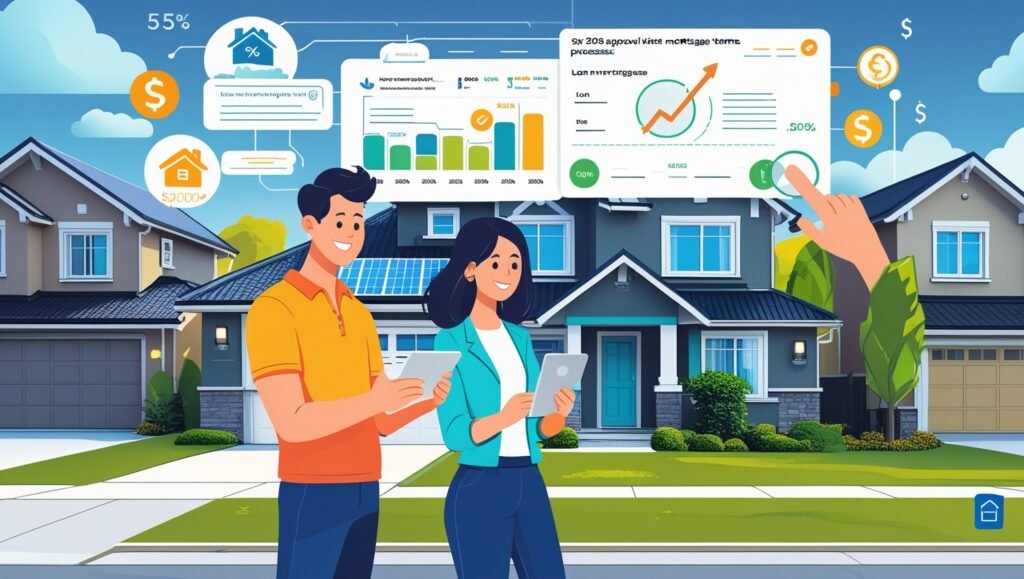
When you take out a mortgage, your monthly payments are made up of several components:
- Principal: The amount of money you borrow.
- Interest: The cost of borrowing, expressed as a percentage (APR).
- Taxes: Property taxes are often included in your monthly bill.
- Insurance: Homeowners insurance and possibly mortgage insurance (PMI) if your down payment is under 20%.
- Escrow: An account managed by your lender to hold taxes and insurance funds.
Most mortgages come with a fixed or adjustable loan term—typically 15, 20, or 30 years. Shorter terms mean higher monthly payments but less interest paid overall. Longer terms mean lower monthly payments but more interest over time.
Understanding how these pieces work together helps you estimate monthly payments, total loan costs, and how much house you can actually afford.
Types of Home Loans in 2025
Fixed-Rate vs Adjustable-Rate Mortgages
In 2025, homebuyers still have two primary choices when it comes to interest rate structure:
- Fixed-Rate Mortgage (FRM): The interest rate stays the same for the entire term of the loan. This is the most popular choice, offering stability and predictable payments.
- Adjustable-Rate Mortgage (ARM): The rate starts low for a set period (often 5, 7, or 10 years), then adjusts annually based on market conditions. ARMs can save money initially but come with more risk.
With rates rising in 2025, some buyers are turning to hybrid ARMs, which blend fixed and variable elements, giving a few years of predictable payments before adjusting.
ARMs may be appealing for short-term homeowners or investors, but for most people planning to stay long-term, a fixed-rate mortgage offers more peace of mind.
FHA, VA, USDA, and Jumbo Loans
There’s no one-size-fits-all mortgage. Here are common types available in 2025:
- FHA Loans: Backed by the Federal Housing Administration, great for first-time buyers with low credit scores. Require just 3.5% down but include mortgage insurance premiums.
- VA Loans: For eligible veterans and military families. No down payment or mortgage insurance required.
- USDA Loans: For rural homebuyers who meet income limits. Also offer 0% down and favorable terms.
- Jumbo Loans: For homes that exceed conforming loan limits (over ~$750,000 in most areas). Require higher credit scores and down payments but allow for luxury or high-cost real estate.
Green Mortgages and Smart Home Loans
A newer addition to the mortgage world in 2025 is the green mortgage. These loans offer reduced interest rates or incentives for buying energy-efficient homes or making eco-friendly upgrades like:
- Solar panel installations
- Smart thermostats and home energy systems
- Efficient insulation or HVAC systems
Some lenders even provide discounts or rebates if your home meets certain energy ratings or uses renewable materials.
These options align with modern values and offer long-term savings through lower utility bills—and sometimes lower monthly payments.
How to Qualify for a Home Loan
Credit Score Requirements
Your credit score is one of the most critical factors in determining your mortgage eligibility. In 2025, lenders use AI-enhanced scoring systems that provide more nuanced insights into your financial behavior, but the fundamentals haven’t changed:
- Excellent Credit (740+): Qualifies you for the best interest rates and lowest fees.
- Good Credit (680–739): Still qualifies for most loans, though rates may be slightly higher.
- Fair Credit (620–679): Eligible for FHA or VA loans but may face higher interest rates and PMI.
- Poor Credit (<620): Tougher to qualify; you may need a co-signer or larger down payment.
Lenders want to see a history of on-time payments, low credit utilization, and lengthy credit history. New fintech mortgage companies also evaluate alternative credit data—like rental history, utility payments, or subscription services—to give more people a shot at homeownership.
Before applying, check your credit report from the major bureaus (Equifax, Experian, TransUnion), dispute any errors, and consider paying down debt to boost your score.
Debt-to-Income Ratio and Income Verification
Your Debt-to-Income (DTI) ratio is another major qualifier. It measures how much of your monthly income goes toward debts, including your projected mortgage payment.
Here’s what lenders look for:
- Conventional loans: DTI under 43% (ideally below 36%)
- FHA loans: Can allow up to 50% DTI with strong compensating factors
To calculate DTI: DTI=(Monthly Debt PaymentsGross Monthly Income)×100\text{DTI} = \left( \frac{\text{Monthly Debt Payments}}{\text{Gross Monthly Income}} \right) \times 100DTI=(Gross Monthly IncomeMonthly Debt Payments)×100
For example, if you earn $6,000/month and pay $2,000 toward loans and the proposed mortgage, your DTI is 33%.
Lenders will also require:
- Pay stubs and W-2s or 1099s
- Tax returns (especially for self-employed)
- Bank statements showing consistent income and savings
The stronger your income profile and debt management, the better your chances at approval and favorable rates.
Down Payment and Savings Expectations
The down payment is the amount you contribute upfront toward your home purchase. While 20% is still ideal, many loans allow much less:
- FHA: 3.5% minimum
- Conventional: As low as 3–5% with good credit
- VA/USDA: 0% down (if eligible)
However, putting down less than 20% usually triggers Private Mortgage Insurance (PMI), which increases your monthly payment.
Beyond the down payment, lenders want to see cash reserves—typically 2–6 months of housing expenses saved up. These savings act as a safety net and reduce the lender’s risk.
In 2025, many buyers use down payment assistance programs, gift funds from family, or even shared equity programs to bridge the gap. Lenders are also accepting cryptocurrency holdings, in some cases, as part of asset verification (though usage varies).
The Home Loan Process Step-by-Step
Pre-Approval to Closing
Getting a mortgage doesn’t happen overnight—even with modern apps. Here’s a simplified overview of the process:
- Pre-Approval: You submit your financial documents to a lender who provides an estimate of what you can afford. This helps you shop for homes with confidence.
- Home Search: Armed with pre-approval, you work with a real estate agent to find a home.
- Offer and Acceptance: You submit an offer. If accepted, the home goes under contract.
- Loan Application: You submit a formal mortgage application with updated documents.
- Processing and Underwriting: The lender verifies your financials, orders an appraisal, and checks the property title.
- Approval and Clear to Close: Once underwriting is complete, you’re cleared for closing.
- Closing Day: You sign paperwork, pay closing costs, and get the keys to your new home.
The whole process can take 3–6 weeks, though fintech lenders are speeding this up through automation, digital signatures, and e-closings.
Working with Lenders and Mortgage Brokers
You can get a home loan through:
- Direct lenders (banks, credit unions, fintech companies)
- Mortgage brokers (independent professionals who shop multiple lenders on your behalf)
Mortgage brokers are helpful if:
- You want access to multiple loan products
- You have a unique financial situation
- You want help comparing rates and terms
Direct lenders offer simplicity and speed, especially if you already bank with them. In 2025, many fintechs (like Better.com, Rocket Mortgage, or Figure) provide instant pre-approval through AI analysis, making the process faster than ever.
Compare both paths and choose the one that offers the best combination of rate, service, and speed.
Mortgage Rates in 2025
Factors Affecting Rates Today
Mortgage interest rates in 2025 are shaped by a dynamic mix of macroeconomic and personal financial factors. While we’ve seen some stabilization after the sharp fluctuations of the early 2020s, rates still vary based on several core elements:
- Federal Reserve Policy: When the Fed adjusts its benchmark rate, mortgage rates usually follow. A rate hike can lead to higher mortgage costs, while cuts often trigger more competitive offers.
- Inflation Trends: High inflation usually leads to higher interest rates as lenders seek to preserve purchasing power.
- Bond Market Activity: Mortgage rates are closely tied to 10-year Treasury yields. When bond yields rise, mortgage rates typically follow.
- Housing Demand: High demand and low inventory can drive up both home prices and mortgage rates.
- Credit Score and Loan Type: The stronger your financial profile, the better your rate. Also, FHA, VA, and conventional loans all have different pricing structures.
In 2025, rates range from 4.75% to 7.25% depending on the loan type, credit score, and lender. Locking in your rate early (especially if you expect rates to rise) can save you thousands.
Where to Track the Best Rates
To find the most accurate and up-to-date mortgage rates, consider using:
- Bankrate.com – Daily national averages and lender comparisons.
- LendingTree – Aggregates offers from multiple lenders based on your credit.
- Zillow Mortgage Marketplace – Shows personalized rates and APRs by location.
- Credit Karma – Personalized rate estimates based on your credit profile.
- Direct lender websites – Quicken Loans, Better Mortgage, and others offer real-time quotes.
Many lenders also offer rate lock tools, so once you find a good deal, you can secure it for 30–60 days while you shop for a home or complete underwriting.
Pro Tip: Rates can change daily—or even hourly—based on market conditions. Set alerts or work with a broker who monitors this for you.
First-Time Homebuyer Tips
Common Mistakes to Avoid
Buying your first home is thrilling, but it’s easy to make mistakes that can cost you big. Here are the top pitfalls to avoid in 2025:
- Not getting pre-approved before house hunting.
- Overestimating your budget—remember to factor in taxes, insurance, and maintenance.
- Draining your savings for the down payment without leaving a cushion.
- Ignoring total loan cost and focusing only on the monthly payment.
- Skipping the home inspection—even new builds can have issues.
- Underestimating closing costs, which can range from 2% to 5% of the home price.
Many buyers also lock into adjustable-rate loans without fully understanding how much their payment can increase later. Always compare APR, not just interest rate, to understand the total cost over time.
Choosing the Right Mortgage Product
Not every loan is created equal—and first-time buyers often default to the most popular option (like a 30-year fixed) without exploring alternatives.
Here’s how to decide:
- Planning to stay 10+ years? Go with a fixed-rate mortgage for stability.
- Need to lower upfront costs? FHA or VA loans may help.
- Buying in a high-cost area? Consider a jumbo loan or piggyback loan.
- Have great credit but short-term goals? A 5/1 ARM may offer a lower rate.
It’s also worth checking if you qualify for first-time homebuyer programs, which can reduce down payments or offer grants and tax credits.
Best Lenders and Mortgage Apps
Top Online Mortgage Platforms in 2025
The digital revolution in lending continues to dominate. These fintech mortgage apps are leading the charge in 2025:
- Better Mortgage: No commissions, quick pre-approvals, and transparent fee structures.
- Rocket Mortgage (by Quicken Loans): Famous for speed and ease of use.
- SoFi: Ideal for professionals with good credit—offers member benefits and fast funding.
- Figure: Uses blockchain for faster closings; great for refinancing or home equity lines.
- LoanDepot: Offers both digital convenience and in-person branches.
What sets these apart:
- 24/7 mobile access
- E-signatures and remote closings
- Personalized rate tools and loan tracking dashboards
If you’re tech-savvy and want to skip the paperwork shuffle, these platforms streamline the process and may offer better rates due to lower overhead.
Traditional Banks vs Fintech Lenders
While fintechs are winning over younger buyers, traditional banks still play a huge role, especially for customers who:
- Prefer face-to-face service.
- Want to bundle with checking/savings products.
- Have complex or high-net-worth financial situations.
Major banks like Wells Fargo, Chase, and Bank of America continue to offer competitive rates, especially with loyalty programs and relationship discounts.
Fintech lenders, on the other hand, often:
- Approve loans faster (sometimes in 1–2 days).
- Charge fewer origination and processing fees.
- Offer transparent, mobile-first experiences.
Ultimately, the best choice depends on your comfort level, timeline, and how much hand-holding you prefer during the process.
Understanding Mortgage Fees and Closing Costs
What You’ll Actually Pay at Closing
Closing costs are one of the most overlooked parts of buying a home. Many first-time buyers are shocked when they realize how much they owe on closing day—often thousands of dollars beyond the down payment.
In 2025, typical closing costs range between 2% and 5% of the home’s purchase price. On a $400,000 home, that’s $8,000 to $20,000.
Here’s a breakdown of common charges:
- Origination fee: Charged by the lender for processing the loan—typically 0.5% to 1%.
- Appraisal fee: $300–$600 to assess the home’s value.
- Title search and title insurance: $500–$1,000 to verify ownership and insure against title disputes.
- Underwriting fee: Covers lender evaluation—about $300–$500.
- Credit report fee: Around $30–$50.
- Escrow funds: Advance payments for taxes and insurance, held by your lender.
- Recording fees: Paid to your county to officially record the transaction.
In many cases, you can negotiate these costs with your lender or have the seller cover some (or all) of them as part of the contract—especially in a buyer’s market.
Hidden Fees to Watch Out For
Some lenders sneak in fees that aren’t clearly disclosed upfront. Keep an eye out for:
- Processing fees or vague “doc prep” charges
- Broker fees if you go through a third party
- Prepaid interest—depending on your closing date
- PMI setup fees if you’re putting less than 20% down
Always request a Loan Estimate (LE) early in the process. It provides a breakdown of all expected costs and gives you the right to compare lenders and switch if needed.
Mortgage Pre-Approval vs Pre-Qualification
What’s the Difference?
These two terms sound similar, but in the mortgage world, they mean very different things:
- Pre-Qualification: A rough estimate of how much you may be able to borrow, based on self-reported information. No credit check or documentation is required.
- Pre-Approval: A formal offer from a lender stating how much they’re willing to lend you, based on verified income, credit, and assets.
Think of pre-qualification as a guess—and pre-approval as a commitment.
Which One Should You Get First?
Start with pre-qualification to get an idea of your home-buying budget, but don’t stop there.
Before you start house hunting seriously, get pre-approved. Sellers in 2025 almost always demand it—especially in competitive markets. A pre-approval letter:
- Gives you stronger negotiation power.
- Makes your offer more credible.
- Helps speed up the mortgage process once you go under contract.
Many digital lenders offer same-day pre-approval using AI underwriting. Just upload your documents and let the platform run the numbers.
Refinancing Options in 2025
When It Makes Sense to Refinance
Refinancing your mortgage means replacing your current loan with a new one—usually to get a better interest rate or change your loan terms. It can be a smart move if:
- Rates have dropped significantly since your original loan.
- Your credit score has improved, qualifying you for a better rate.
- You want to switch from an ARM to a fixed-rate mortgage.
- You need to lower your monthly payment by extending the loan term.
In 2025, refinancing can also include green upgrades or tapping into home equity for renovations.
Cash-Out Refi vs Rate-and-Term Refi
- Rate-and-Term Refinance: Adjusts your interest rate and/or loan term—no cash involved.
- Cash-Out Refinance: You take out a larger loan than your existing mortgage and pocket the difference. Great for home improvements or paying off debt.
Each option comes with its own pros and cons. Cash-out refis can increase your monthly payment and interest costs, while rate-and-term options may shorten your loan and save you money long term.
Special Programs and Incentives
First-Time Buyer Grants and Down Payment Assistance
Homeownership can feel out of reach—but you don’t always need to do it alone. There are many first-time buyer programs in 2025 designed to help you afford your first property:
- Federal Housing Administration (FHA) Grants
- State and local assistance programs
- Employer-sponsored housing help
- Bank-sponsored grants for low-income buyers
These can cover part of your down payment, closing costs, or both. Some are forgivable loans that don’t need to be repaid if you stay in the home for a certain number of years.
Government Programs and Local Initiatives
Aside from FHA and VA loans, the federal government continues to offer:
- HomeReady by Fannie Mae
- Home Possible by Freddie Mac
- Native American Direct Loan (NADL)
- Neighborhood Stabilization Program (NSP)
Many cities and counties also have affordable housing programs for residents who meet income guidelines or purchase in specific zip codes.
Check with your local housing authority or a HUD-certified counselor to explore what’s available in your area.
Risks and Challenges of Home Loans
What Happens If You Miss a Payment
Life happens—and missing a mortgage payment can feel scary. In 2025, lenders are more digitally responsive, but the consequences are still serious:
- Late fees kick in after 15 days.
- Credit damage begins after 30 days.
- Default status starts after 90 days.
Most lenders will offer forbearance, refinancing, or hardship programs if you reach out early. Communication is key.
Avoiding Foreclosure and Scams
Foreclosure happens when a borrower defaults and the lender repossesses the home. It’s devastating—but often avoidable.
To protect yourself:
- Stay in contact with your lender if facing hardship.
- Be wary of “foreclosure rescue” scams promising fake relief.
- Never wire money or sign documents without verifying the source.
If in doubt, contact a HUD-approved housing counselor or legal aid organization in your state.
Conclusion
Buying a home in 2025 is an exciting, life-changing step—but it comes with complexity, paperwork, and decisions that shouldn’t be rushed. Whether you’re a first-timer or refinancing your third home, understanding how mortgages work is your biggest advantage.
From choosing the right loan type and lender to navigating pre-approvals, closing costs, and modern fintech tools, this guide arms you with everything you need to make smart, confident choices. Don’t let the jargon intimidate you—homeownership is within reach when you’re informed and prepared.
So take your time, shop around, and choose a loan that not only gets you the keys—but keeps you financially healthy for years to come.
FAQs
What credit score is needed for a mortgage in 2025?
Most lenders require a score of at least 620 for conventional loans and 580 for FHA loans. The higher your score, the better your rate.
How much should I save for a down payment?
Ideally 20% to avoid PMI, but many loans allow as little as 3% down. Aim to also save 2–5% for closing costs.
Is it better to get a mortgage from a bank or online lender?
Online lenders often offer faster approvals and lower fees. Traditional banks offer personalized service and may be better for complex situations.
What is a good interest rate in 2025?
Rates vary, but anything under 6% is considered strong in 2025, especially with inflation and economic shifts.
Can I buy a home with no money down?
Yes. VA and USDA loans offer 0% down options if you qualify. Some programs also offer grants to cover the down payment.
About the Author