Introduction
The Rise of Stock Trading Apps in a Digital Economy
Over the last decade, stock trading has transformed from something only Wall Street insiders did behind massive monitors to something anyone with a smartphone can do during their morning coffee. By 2025, stock trading apps have become not just tools—but lifelines—for retail investors. Whether you’re an aspiring day trader, a long-term investor, or simply looking to park your savings somewhere smarter, stock trading apps have made investing more accessible, affordable, and flexible than ever before.
The rise of commission-free trading, real-time alerts, AI-powered recommendations, and sleek interfaces has given even the most casual investors an edge that would’ve cost thousands just a few years ago. Gone are the days of paying $10 per trade or waiting on a financial advisor to make your next move. In today’s world, the power is in your pocket.
The global events of the early 2020s accelerated the digital shift. Remote work, economic volatility, and the democratization of financial knowledge (hello, TikTok and YouTube investors) created a generation of DIY traders—and apps rose to meet the demand.
Why Choosing the Right App Matters for Your Investment Goals
Not all stock trading apps are created equal. Some prioritize user experience and simplicity, while others offer powerful technical tools for advanced strategies. Some specialize in long-term wealth building with ETFs and IRAs, while others are built for high-frequency traders who live and breathe candlestick patterns.
Choosing the right app isn’t just about flashy features—it’s about aligning with your investment style, risk tolerance, and financial goals. Do you need deep market research and detailed analytics? Or do you prefer bite-sized data, gamified investing, and community-driven ideas?
With hundreds of apps out there, each claiming to be the “best,” it’s critical to understand what you actually need. Because the wrong platform could cost you—through poor execution, lack of data, hidden fees, or worse, security flaws.
This guide breaks down everything—from top platforms to emerging tech—to help you find the stock trading app that fits your financial future.
Key Features to Look for in a Stock Trading App
Real-Time Data and Market Access
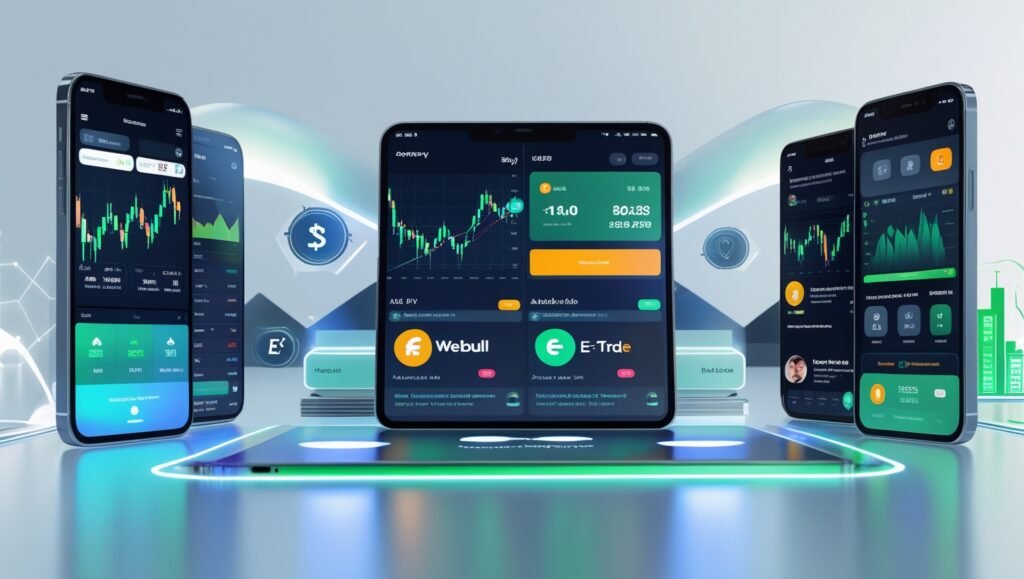
Speed is everything in investing—especially for short-term trades or volatile markets. A solid trading app in 2025 should offer real-time data feeds, not delayed quotes. Look for features like:
- Live charts with 1-minute, 5-minute, and daily intervals.
- Real-time news integration from Reuters, Bloomberg, or CNBC.
- Market depth views showing bid/ask levels.
- Level II trading data for more serious traders.
Additionally, ensure the app offers access to pre-market and after-hours trading, especially if you’re in different time zones or like to react early to earnings reports.
Some apps offer tiered access—where real-time data is free for casual users, but pro-level tools (like advanced charting and data feeds) come with a premium subscription.
Low or Zero Commission Trading
Most modern trading apps offer zero-commission trading, but that doesn’t mean all fees are gone. Here’s what you should look for:
- No commissions on US-listed stocks and ETFs.
- Zero fees on buying/selling crypto (if supported).
- Free ACH transfers to move money in and out.
- No inactivity or account maintenance fees.
That said, beware of hidden costs. Apps may still make money off spread markups (buy/sell price differences), order flow payments, or premium features like margin trading.
The goal is to find a platform that gives you cost transparency—so you’re not being charged in ways you don’t understand.
User Interface, Ease of Use, and Customization
No one wants to trade on an app that feels like navigating a spaceship unless you’re a seasoned pro. For most users, simplicity and clarity matter more than flashy features.
The best apps in 2025 offer:
- Clean, intuitive dashboards with customizable widgets.
- Watchlists, alerts, and dark mode for comfort.
- One-tap trading with confirmation steps to avoid mistakes.
- Biometric login and quick access to portfolios, history, and news.
Customization is king. Whether you want a full-screen candlestick chart with RSI indicators or a quick glance at your portfolio gain/loss, the best apps let you tailor your experience.
Top Stock Trading Apps in 2025

Robinhood – Best for Beginners and Zero-Commission Trades
Still one of the most popular platforms for retail traders, Robinhood has evolved from its 2013 roots into a full-fledged investment app. It’s known for:
- Zero commissions on stocks, ETFs, crypto, and options.
- Super simple interface, perfect for new traders.
- Robinhood Gold: access to margin trading, deeper data, and analyst reports.
- Fractional shares and recurring investments.
Robinhood also introduced retirement accounts (Roth and traditional IRAs), bringing long-term investing into its once day-trading-focused platform. However, critics still question its customer service and order execution quality for active traders.
E*TRADE – Best for Tools and Research
E*TRADE continues to be a powerhouse for investors who want more than just a basic buy/sell interface. Now fully integrated with Morgan Stanley, E*TRADE offers a hybrid experience that caters to both DIY traders and those looking for institutional-level research.
Here’s what makes it stand out:
- Access to robust charting tools, technical analysis, and educational videos.
- Top-tier third-party research from Morningstar, CFRA, and Moody’s.
- Multiple platforms: the mobile app for quick trades, Power E*TRADE for serious chartists, and web dashboard for everyday investors.
- Wide range of investment options including stocks, options, mutual funds, ETFs, and futures.
While it may be a little overwhelming for beginners, it’s ideal for those looking to level up their trading game with real-time analytics and a customizable interface.
Webull – Best for Intermediate Traders
Webull has grown rapidly thanks to its blend of advanced tools, commission-free trading, and a sleek, mobile-first design. It’s a strong choice for traders who are past the beginner stage but not quite ready for institutional-level platforms.
Key features include:
- Free Level II market data (limited-time or with minimum balance).
- Crypto and options trading with no commission.
- Extended hours trading (pre-market and after-hours).
- Customizable technical indicators, drawing tools, and multi-chart layouts.
Webull also supports paper trading, allowing users to practice strategies without risking real money—perfect for sharpening your skills or testing new setups.
What’s missing? Mutual funds and retirement accounts. But if you’re focused on active stock and options trading, Webull hits the sweet spot.
Fidelity – Best for Long-Term Investors
If you’re more interested in building wealth over time than chasing meme stocks, Fidelity is a top-tier choice. Renowned for its long-standing reputation and customer-first approach, Fidelity shines in areas that matter most to long-term investors:
- Access to fractional shares, index funds, and commission-free ETFs.
- Excellent tools for retirement planning, IRAs, and 401(k) rollovers.
- Highly rated customer service with real financial advisors.
- Fidelity Go – a robo-advisor for automated investing based on your risk profile.
Their mobile app includes goal tracking, budget planning, and access to Fidelity Viewpoints—a rich feed of market analysis and economic insights.
While day traders might find it less dynamic, it’s a goldmine for those who want stability, planning tools, and tax-advantaged growth.
Charles Schwab – Best All-Around Platform
Charles Schwab combines the best of both worlds: active trading tools and long-term investment resources in one seamless ecosystem. By 2025, it has fully integrated TD Ameritrade into its fold, giving users access to the iconic thinkorswim platform.
Why it’s a favorite:
- Commission-free trades across stocks, ETFs, and options.
- Access to thinkorswim for pro-level charting, scripting, and backtesting.
- Broad range of investment products, including international stocks, mutual funds, and fixed income.
- Excellent customer support and branch access for in-person help.
Charles Schwab is ideal for multi-strategy investors—those who want to swing trade part of their portfolio while building a diversified nest egg on the side.
Interactive Brokers – Best for Global Investing
Interactive Brokers (IBKR) is the heavyweight champion for advanced and international investors. With ultra-low fees and access to over 135 global markets, it’s the go-to choice for serious traders and professional investors.
Highlights:
- IBKR Lite: commission-free U.S. stock and ETF trades for casual traders.
- IBKR Pro: low-cost tier with tighter spreads, ideal for high-volume traders.
- Access to foreign stocks, currencies, futures, and bonds.
- Advanced tools like Trader Workstation, algorithmic order routing, and complex options strategies.
The platform’s learning curve is steep, but the power is unmatched. If you’re trading internationally or using sophisticated strategies, Interactive Brokers is in a league of its own.
New and Emerging Trading Apps
AI-Powered Trading Platforms
In 2025, artificial intelligence is no longer a futuristic concept—it’s integrated into trading apps that make decisions based on historical patterns, sentiment analysis, and real-time market shifts.
Apps like Zignaly, Tend, and Q.ai use AI to:
- Recommend portfolio adjustments based on your goals.
- Analyze news sentiment and market reactions.
- Automate trades using rules and predictive models.
These platforms are perfect for busy professionals who want smart automation but still retain control. However, investors should do their homework—AI isn’t magic, and performance varies depending on the algorithms.
Social Trading and Copy Trading Apps
Social investing has exploded thanks to platforms like Public, eToro, and TradingView Communities. These apps combine a trading platform with a social feed where users can:
- Share portfolios and performance metrics.
- Follow top investors and copy their trades in real time.
- Learn strategies and engage in discussions.
This makes investing feel collaborative, educational, and dynamic—especially for younger investors who grew up in online communities.
Copy trading is appealing, but it’s important to remember that past performance doesn’t guarantee future success. Choose influencers or strategies that align with your goals, not just viral hype.
Security and Regulation
How Safe Are These Apps?
With billions of dollars moving through stock trading apps daily, security is more important than ever. Thankfully, most leading platforms in 2025 employ enterprise-level protection measures. These include:
- Two-factor authentication (2FA) via SMS or authenticator apps.
- Biometric logins like fingerprint or facial recognition.
- Data encryption (AES-256) both in transit and at rest.
- Automatic logout and device management tools.
Beyond technical security, apps have also improved their fraud detection systems, automatically flagging suspicious trades or logins. In-app notifications alert users of any changes, ensuring they can act fast in case of unauthorized access.
Still, users must do their part—use strong passwords, avoid public Wi-Fi for trading, and regularly review account activity. Security is a shared responsibility.
Regulatory Oversight and SIPC Protection
All legitimate U.S.-based trading apps are regulated by the Securities and Exchange Commission (SEC) and Financial Industry Regulatory Authority (FINRA). These bodies enforce strict compliance rules and ethical trading practices.
In addition, user accounts are typically covered by the SIPC (Securities Investor Protection Corporation), which protects up to $500,000 in securities and $250,000 in cash (in case of broker failure—not market loss).
Make sure any app you use is:
- FINRA-registered
- SIPC-insured
- Transparent with its risk disclosures
Apps without these credentials should raise immediate red flags.
Investing Options Beyond Stocks
ETFs, Mutual Funds, and Bonds
While stocks get most of the spotlight, the best stock trading apps offer access to other asset classes that help build a diversified portfolio. Here’s what to expect:
- ETFs (Exchange-Traded Funds): Commission-free on most platforms, great for passive investing and diversification.
- Mutual Funds: Available through apps like Fidelity, Charles Schwab, and E*TRADE, some with zero transaction fees.
- Bonds: U.S. Treasury bonds, corporate bonds, and bond ETFs help reduce portfolio risk and provide fixed income.
For long-term investors, having these tools in your app means you don’t need a separate brokerage account—everything is managed in one place.
Crypto Integration and Alternative Assets
2025 is also the year more apps have integrated cryptocurrency into their ecosystems. Robinhood, Webull, and SoFi offer crypto trading for coins like Bitcoin, Ethereum, Solana, and emerging altcoins.
Other platforms, such as Public and eToro, have expanded into fractional real estate, fine art, and commodities like gold and oil—all from within their mobile interfaces.
This integration allows for true portfolio diversification, especially for those looking to hedge against inflation or explore higher-risk, higher-reward markets.
Comparing Mobile vs Desktop Trading
Features Unique to Each Platform
Both mobile and desktop trading platforms have matured significantly, but they still serve different types of investors.
Mobile Apps:
- Best for on-the-go trading and quick portfolio checks.
- Simpler interfaces and touch navigation.
- Great for alerts, notifications, and one-tap trades.
- Optimized for day-to-day investing.
Desktop Platforms:
- Best for technical analysis, multi-chart layouts, and data-heavy tools.
- Full keyboard access makes complex orders easier.
- Often include downloadable software (like thinkorswim or Trader Workstation).
- Preferred by active traders and institutions.
Some platforms (like Webull and Interactive Brokers) provide near-parity between mobile and desktop, while others (like Fidelity and Robinhood) have streamlined apps that simplify investing for the masses.
Which Is Better for Which Type of Trader?
- Beginner or passive investor? Mobile-only apps like Robinhood or SoFi are perfect.
- Swing or day trader? Use a platform with a strong desktop presence, such as E*TRADE, IBKR, or Charles Schwab.
- Research-driven or retirement-focused? Desktop gives you more control over long-term strategy and planning tools.
Ideally, choose a provider that gives you both—then switch based on your needs and environment.
Fees and Hidden Costs
Understanding Spread, Margin, and Subscription Fees
Even if an app advertises “free trading,” there may be hidden costs that impact your returns. Common ones include:
- Spread: The difference between buy and sell prices, often how zero-commission apps profit.
- Margin Interest: Borrowing money to trade comes with interest—rates can vary widely.
- Subscription Fees: Premium tiers (like Robinhood Gold or Webull Pro) charge monthly fees for enhanced features.
- Withdrawal or wire transfer fees: Most ACH withdrawals are free, but wires can cost $25–$40.
- Currency conversion fees: When trading foreign stocks, look out for FX markups.
Read the fee schedule of any app before committing—and always check how they monetize user activity, especially order flow.
How Apps Make Money Even Without Commissions
Here’s how “free” apps actually earn:
- Payment for Order Flow (PFOF) – They route your trade to a market maker in exchange for a rebate.
- Interest on Uninvested Cash – Idle balances earn interest for the broker.
- Premium Subscriptions – Gold/Pro accounts with research tools or larger instant deposits.
- Margin Lending – They charge interest when you trade on borrowed funds.
- Securities Lending – Some platforms lend your shares to short sellers (you may or may not be compensated).
This business model isn’t necessarily bad, but transparency is key. Platforms like Public and Fidelity have taken a stand against PFOF, promoting a more user-centric approach.
Educational Tools and Support
Built-In Courses and News Feeds
The best stock trading apps in 2025 don’t just help you trade—they help you learn. Whether you’re a complete beginner or a seasoned investor looking to sharpen your strategy, educational tools are essential.
Top platforms like Fidelity, E*TRADE, and Robinhood now offer:
- Integrated investing courses on topics like fundamentals, technical analysis, and risk management.
- Real-time news feeds curated by major financial networks such as Bloomberg, Reuters, and CNBC.
- Glossaries and help centers that explain key financial terms, indicators, and order types.
Apps like SoFi and Public also provide podcasts, video explainers, and “learn as you go” modules that break down complex concepts in bite-sized formats—ideal for visual learners or mobile-first users.
This is incredibly useful for building financial literacy alongside your portfolio growth.
Simulators and Demo Accounts
For those who want to practice trading without risking real money, several apps offer simulators or demo accounts. These let you test strategies, understand how orders work, and explore different markets using virtual funds.
Top platforms with this feature:
- Webull (paper trading with advanced tools)
- Interactive Brokers (demo accounts for both Lite and Pro users)
- TD Ameritrade/Charles Schwab (via thinkorswim platform)
Even some mobile-first apps have begun rolling out “practice portfolios” where you can simulate real-world trading conditions and learn from your successes—or failures—before you invest real cash.
Social and Community Features
In-App Forums and Leaderboards
The community aspect of investing is growing rapidly, especially among younger users. Apps like Public, eToro, and Stocktwits offer built-in social features where investors can:
- Discuss trades and market trends in forums.
- View real-time sentiment analysis from peers.
- Follow trending stocks and watch what others are trading.
Leaderboards and influencer-style profiles are also trending, with users gaining followers based on performance, transparency, or shared insights. This gamifies investing and adds a social layer that many users find motivating and educational.
However, be cautious—just because someone is popular doesn’t mean their strategies are sound. Always do your own research.
Copy Trading and Influencer Portfolios
Copy trading, once reserved for forex platforms, is now fully integrated into stock apps. Platforms like eToro and Zignaly let users mirror the trades of top-performing investors with a single click.
Some apps even allow:
- Viewing influencer portfolios in real time.
- Allocating a portion of your funds to auto-copy their moves.
- Accessing strategy insights, risk scores, and past performance data.
This democratizes investment strategy access, but it’s not foolproof. Many top traders take higher risks, and results vary over time. Use copy trading as a tool to learn, not a guarantee for profit.
AI, Automation, and Robo-Advisors
Smart Portfolios and Automated Trading
In 2025, AI has become a standard feature in modern trading apps. Robo-advisors like Wealthfront, Fidelity Go, and Betterment allow you to:
- Create diversified portfolios based on your goals, timeline, and risk.
- Automatically rebalance your investments.
- Harvest tax losses and optimize returns with minimal intervention.
Apps like Q.ai and Tend use machine learning to suggest trades based on market conditions, sentiment data, and macroeconomic indicators. These AI tools help newer investors avoid emotional mistakes and give experienced users data they might overlook.
Limitations and When to Use AI for Investing
While automation offers convenience, it’s not always the best fit for active traders or those looking to make rapid market decisions. AI still has limitations when:
- Interpreting breaking news or sudden geopolitical events.
- Adjusting for short-term volatility.
- Handling niche investment goals (like ESG or impact investing).
Use AI and robo tools when you want consistent, long-term growth, not when trying to time the next big market swing.
Tips for Choosing the Right App for You
Based on Investment Style, Goals, and Budget
Here’s a quick cheat sheet:
| Investor Type | Best App Recommendation | Why |
|---|---|---|
| Beginner | Robinhood, SoFi | Easy to use, low cost, great UI |
| Passive Investor | Fidelity, Betterment | Long-term tools, IRAs, robo-advisors |
| Active Trader | Webull, E*TRADE, Schwab | Advanced charts, options, research tools |
| Global Investor | Interactive Brokers | Access to foreign stocks, currency, bonds |
| Social Investor | Public, eToro | Copy trading, influencer portfolios |
Match your app to your actual needs, not just trends. And if you’re unsure, start small—most platforms allow you to invest as little as $1.
Red Flags to Watch Out For
- Lack of regulatory compliance (no FINRA or SIPC).
- Overly aggressive marketing or unrealistic return promises.
- Poor user reviews, frequent app crashes, or missing support.
- No transparent fee schedule.
- Limited or no customer service options.
If it feels shady—it probably is. Stick to platforms with verified licenses and good reputations.
Conclusion
Stock trading apps have redefined how people invest in 2025. With powerful features, lower costs, and innovative tools, anyone can build wealth right from their phone. But as options grow, choosing the right app becomes even more critical.
Whether you’re just getting started or you’re looking to refine your strategy, the right platform will support your goals, educate you along the way, and empower you to make smarter financial decisions. Focus on usability, security, costs, and alignment with your investing style—and you’ll be ready to navigate the markets with confidence.
FAQs
What is the best stock trading app for beginners?
Robinhood, SoFi, and Public are excellent for beginners thanks to their simple interfaces and commission-free trades.
Are stock trading apps safe for large investments?
Yes, as long as the app is SIPC-insured and regulated by FINRA. Choose platforms with advanced security features and good reviews.
How do commission-free apps make money?
Most earn through payment for order flow (PFOF), interest on uninvested cash, premium subscriptions, and securities lending.
Can I trade crypto and stocks in the same app?
Yes. Apps like Robinhood, Webull, SoFi, and Public allow both crypto and stock trading in one interface.
Do trading apps offer real-time data?
Many do, especially premium versions. Look for platforms offering live quotes, Level II data, and customizable alerts.
About the Author