Introduction
The Luxury Car Showdown
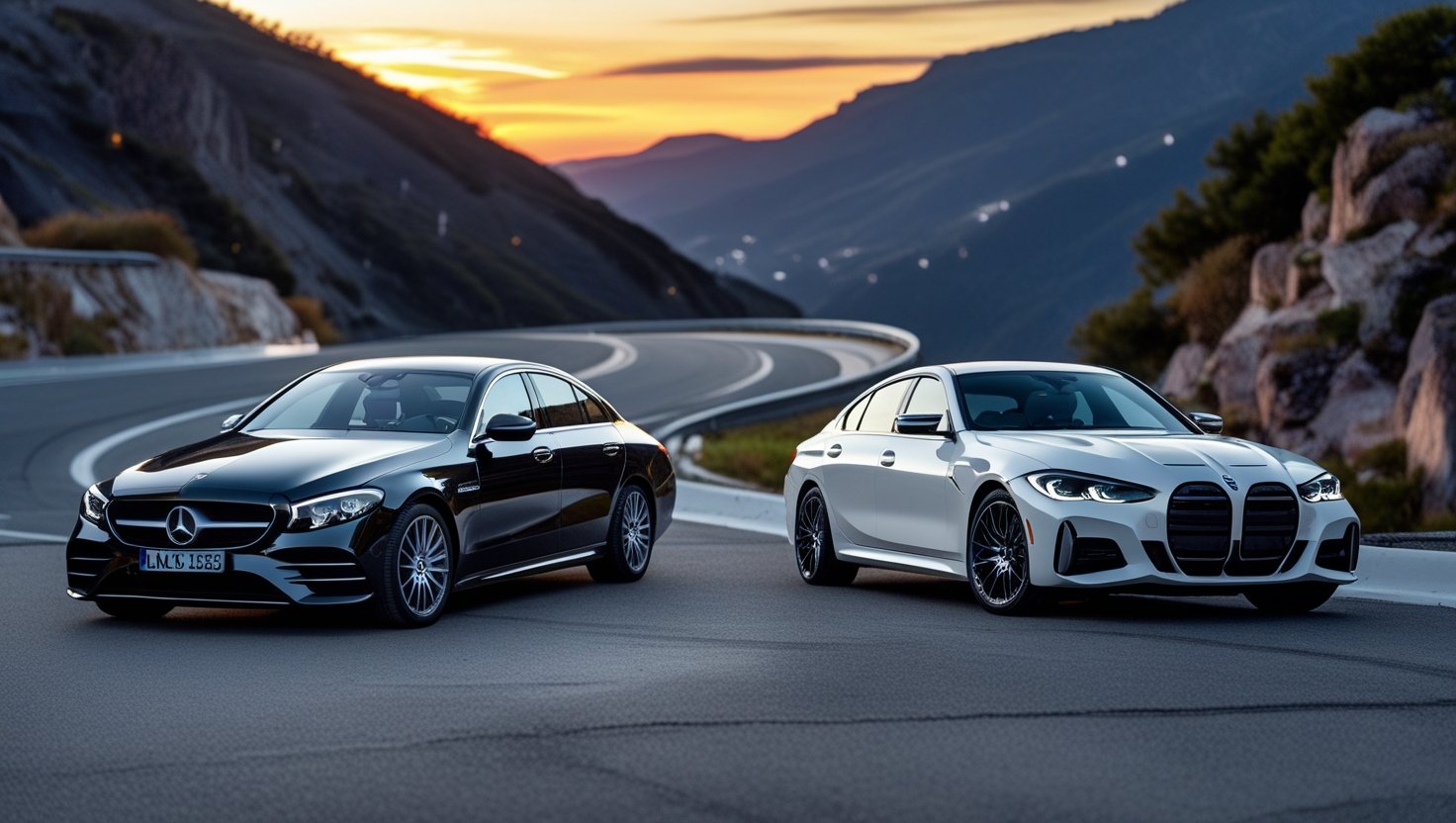
When it comes to luxury automobiles, two names dominate the conversation: Mercedes-Benz and BMW. These German giants have been battling it out for supremacy in engineering, comfort, performance, and innovation for decades. It’s the rivalry that defines the premium automotive market. Whether you’re a die-hard BMW fan or a Mercedes aficionado, there’s no denying that both brands bring a unique flavor to the world of luxury cars.
Mercedes and BMW represent two philosophies. Mercedes focuses on elegance, prestige, and cutting-edge technology, while BMW is built around driving pleasure, precision, and performance. But which one is actually better?
In this article, we’ll take a deep dive into the many facets that define both brands—from performance and design to reliability and ownership cost. Whether you’re in the market for a new car or just a car enthusiast looking to settle the score, this comparison has everything you need to know.
Why the Mercedes vs BMW Debate Matters
This isn’t just about personal preference—it’s a financial and lifestyle decision for millions of people around the world. Mercedes and BMW both command significant investment, and understanding what sets them apart can help buyers make a smarter, more informed decision.
Are you more interested in plush interiors and advanced tech, or do you crave a responsive, thrilling drive? Would you rather own a vehicle that ages with grace or one that feels alive on every corner?
Keep reading, because we’re about to explore this comparison from every angle that matters.
Brand Heritage and Reputation
Mercedes-Benz: The Pioneer of Automotive Innovation
Mercedes-Benz is often considered the grandfather of the automobile. In fact, Karl Benz invented the first petrol-powered car in 1886. From that moment, Mercedes has set the gold standard in automotive innovation, with a reputation that echoes prestige, class, and sophistication.
Over the decades, Mercedes has built a legacy of pioneering technologies—anti-lock braking systems, airbags, adaptive cruise control, and more. Their vehicles are synonymous with comfort, elegance, and a touch of aristocracy. Step into a Mercedes, and it feels like you’re entering a world built for dignitaries and royalty.
The three-pointed star on the hood is more than a logo—it’s a symbol of global recognition and engineering excellence. Mercedes cars aren’t just about getting from point A to B—they’re about how you feel during the journey.
BMW: The Ultimate Driving Machine
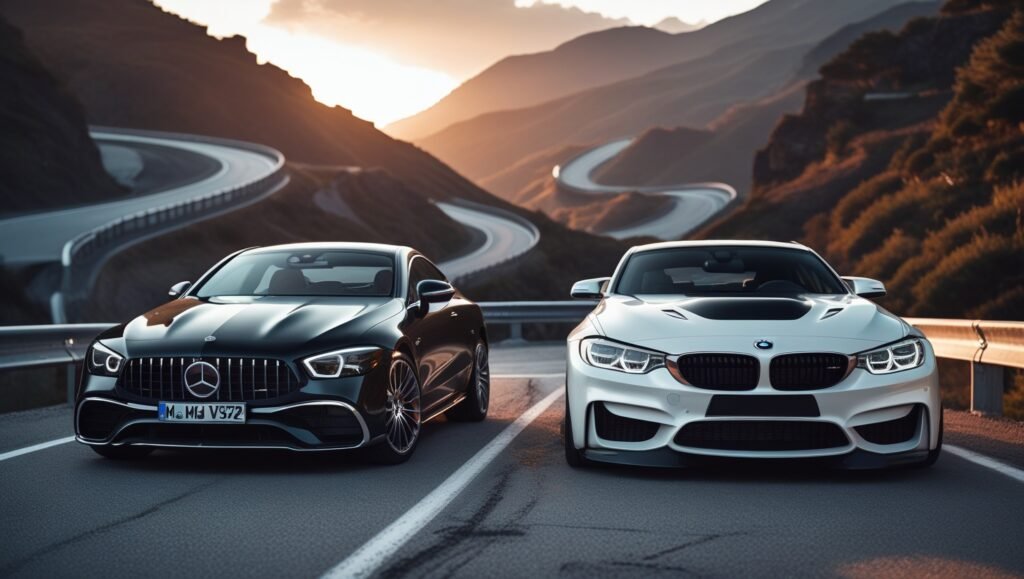
BMW, short for Bayerische Motoren Werke, took a different approach. While Mercedes chased refinement and luxury, BMW planted its flag in the realm of driver engagement. Born from aircraft engines and motorsport roots, BMW is known for producing cars that deliver a visceral driving experience.
The company coined the slogan “The Ultimate Driving Machine,” and it wasn’t just a marketing gimmick. With near-perfect weight distribution, agile handling, and powerful engines, BMWs feel alive on the road. They speak to people who don’t just want to drive—they want to feel every curve, every gear shift.
BMW also has a solid reputation for innovation, especially in engineering dynamics. Their commitment to rear-wheel-drive platforms and straight-six engines has earned them a loyal fanbase that loves the thrill of driving.
Global Recognition and Prestige
Globally, both brands are widely respected. Mercedes has a slight edge in sheer brand prestige—often preferred by CEOs, diplomats, and luxury connoisseurs. BMW, on the other hand, tends to attract younger, more performance-oriented drivers.
In short: Mercedes screams sophistication. BMW whispers excitement.
Design and Aesthetic Appeal
Mercedes-Benz: Elegance and Sophistication
Design-wise, Mercedes leans heavily into refinement. Their cars feature smooth curves, graceful lines, and an unmistakable aura of sophistication. From the sleek silhouette of the S-Class to the aggressive flair of the AMG GT, Mercedes designs command attention without screaming for it.
Inside, it’s like entering a five-star lounge. Ambient lighting, flowing dashboard lines, and soft-touch materials greet you the moment you open the door. Everything feels intentional—crafted to pamper, not just impress.
Mercedes excels at blending modern luxury with classic elegance. The interiors are hushed, refined, and filled with high-end materials like real wood, brushed aluminum, and premium leather. Their focus isn’t just on looking good, but on creating an environment that feels timeless.
BMW: Sporty and Aggressive Design
BMW design, on the other hand, speaks to power and agility. The kidney grille is instantly recognizable, and newer models have pushed boundaries with bolder, more aggressive front fascias. The stance of a BMW is purposeful, athletic, and confident.
Step inside a BMW, and the vibe changes. It’s driver-focused, functional, and purposeful. Every button, knob, and screen placement is meant to put the driver in command. It may not be as plush as a Mercedes, but it feels more like the cockpit of a precision machine.
BMWs have always walked the line between sporty and stylish, often appealing to those who want a bit of edge with their luxury. They prioritize dynamic proportions, sharp angles, and a modern, muscular silhouette.
Interior Design and Comfort Comparison
When it comes to cabin comfort, Mercedes generally takes the lead. The seats tend to be more cushioned, the ride quieter, and the materials slightly more upscale. The cabin design favors aesthetics and comfort above all else.
BMW interiors, while not lacking in quality, put ergonomics and engagement first. Their sport seats are firmer, the dashboards flatter, and the color schemes more subdued. It’s a space that says, “Let’s go,” not “Let’s relax.”
Both are excellent—but if you prioritize sheer comfort and elegance, Mercedes has the edge. If you’re all about engagement and a sporty layout, BMW is where it’s at.
Performance and Driving Experience
Mercedes Performance Philosophy
Mercedes-Benz vehicles are engineered with one goal in mind—delivering smooth, confident, and effortless performance. Whether you’re behind the wheel of an entry-level C-Class or a fire-breathing AMG model, the brand’s dedication to refinement is evident. Mercedes engines are tuned for torque-heavy power delivery, allowing for relaxed acceleration without needing to rev high. The focus is on comfort, luxury, and seamless power.
Even in their performance-focused AMG lineup, Mercedes manages to blend brute force with elegance. AMG models, such as the E63 S or the GT 63, are absolute monsters under the hood, delivering well over 600 horsepower in many cases, yet they’re still wrapped in leather, lined with ambient lighting, and smooth as silk on the highway.
In terms of driving experience, Mercedes sedans and SUVs offer one of the quietest cabins in the business, with advanced suspension systems like AIRMATIC and E-ACTIVE BODY CONTROL that practically erase imperfections in the road.
BMW Performance Focus
BMW is unapologetically driver-centric. The Bavarian automaker fine-tunes each vehicle to provide a sense of connection between man and machine. From the precise steering feedback to the rear-wheel-drive dynamics, BMW aims to deliver a thrill every time you press the accelerator.
One of the most iconic aspects of BMW performance is its inline-six engine—found in models like the 3 Series and M340i—which is often praised for its smoothness, power delivery, and engaging feel. Even their electric and hybrid offerings maintain that signature sporty character, thanks to thoughtful engineering and suspension tuning.
BMW’s M division—responsible for their high-performance variants—takes things to another level. Cars like the M3, M5, and X5M are benchmarks in their respective segments, combining track-worthy speed with everyday usability.
Engine, Handling, and Ride Quality Comparison
When comparing engine specs, both brands offer a wide array of turbocharged four-cylinders, six-cylinders, V8s, and hybrid powertrains. However, BMW tends to get more out of smaller engines in terms of raw driving dynamics, thanks to better weight distribution and performance calibration.
Handling is where BMW shines. Their chassis tuning gives you confidence in tight corners, while the steering—especially in M Sport models—is communicative and sharp. Mercedes vehicles, while stable and composed, often feel a bit more relaxed, prioritizing comfort over corner-carving agility.
Ride quality is subjective. Mercedes is smoother and more isolated, especially in higher-end models with adaptive air suspension. BMW sacrifices some of that softness for a firmer, more connected ride. It really comes down to what kind of driver you are—laid-back cruiser or spirited enthusiast.
Technology and Features
Mercedes MBUX and Tech Ecosystem
Mercedes has heavily invested in technology, with the MBUX (Mercedes-Benz User Experience) system leading the charge. MBUX offers a beautifully rendered touchscreen, voice control that actually works, and artificial intelligence that adapts to your driving habits. Say “Hey Mercedes,” and the car will adjust your climate control, navigation, or lighting preferences without lifting a finger.
The latest S-Class features dual OLED screens, haptic feedback, augmented reality navigation, and biometric authentication. It feels futuristic and luxurious all at once. Even base models like the A-Class benefit from this high-end tech trickling down the lineup.
Mercedes also includes a range of semi-autonomous features like adaptive cruise control, lane-keeping assist, and a 360-degree camera system with one of the sharpest resolutions on the market.
BMW iDrive and Intelligent Systems
BMW counters with its iDrive system, now in its eighth iteration. iDrive has evolved into one of the most intuitive infotainment platforms available. The rotary controller, voice commands, and touchscreen combo give you flexible control over everything from climate to navigation and media.
BMW also uses augmented reality displays, head-up navigation, and gesture control. Their digital instrument clusters are customizable and sleek, although some users find the menus slightly less intuitive than MBUX.
One area where BMW excels is real-time driving feedback. Their systems display performance data like G-forces, torque distribution, and lap timers, which appeals to performance geeks and track-day warriors.
Safety, Infotainment, and Innovation Face-Off
Both brands take safety seriously, offering a suite of driver-assistance features including automatic emergency braking, blind-spot monitoring, and adaptive cruise control. Mercedes has a slight edge in semi-autonomous driving capabilities, particularly in their S-Class and EQS models.
Infotainment is a close call. Mercedes wins in aesthetics and innovation, while BMW wins in ergonomics and customization. Mercedes infotainment feels like a digital lounge; BMW’s feels like a command center.
In terms of innovation, Mercedes is leading the charge in electrification and AI-powered interiors, while BMW is pushing boundaries in connectivity, personalization, and driving analytics.
Reliability and Maintenance Costs
Longevity and Durability
Reliability can be a sticking point for both brands. Neither Mercedes nor BMW is known for Toyota-like dependability, but recent models have shown improvement. Historically, Mercedes has edged out BMW in terms of long-term durability, especially with older E-Class and S-Class sedans known for crossing 200,000 miles with proper maintenance.
BMWs, while reliable under warranty, often face issues after the 100,000-mile mark if not meticulously maintained. Their high-performance engines and turbochargers can be prone to wear, and repairs can be costly.
Cost of Ownership: Maintenance and Repairs
Ownership costs for both brands are on the high side. Oil changes, brake jobs, and transmission work can run hundreds—sometimes thousands—of dollars depending on the model. Mercedes parts tend to be slightly more expensive, but BMWs may require more frequent repairs depending on driving habits.
Extended warranties and prepaid maintenance plans are common options that help reduce surprises down the line. On average, BMW’s annual maintenance cost is slightly higher, mostly because their cars demand more performance-grade servicing.
Warranty and Customer Service
Both Mercedes and BMW offer competitive warranty coverage: typically four years or 50,000 miles. Mercedes includes some complimentary maintenance services during the first year, while BMW often bundles maintenance into the initial purchase price for a limited term.
In terms of dealership experience and customer service, Mercedes has historically rated higher in satisfaction surveys. BMW, however, tends to score better with performance and driving satisfaction.
Model Range and Versatility
Mercedes Lineup Overview
Mercedes-Benz offers one of the most comprehensive lineups in the luxury segment. From compact sedans to full-size SUVs, sporty coupes, convertibles, and even electric vehicles, Mercedes has a car for every type of buyer.
The sedan lineup starts with the A-Class and moves up through the CLA, C-Class, E-Class, and the flagship S-Class. Each tier offers more luxury, more space, and more advanced features. Then there’s the AMG division, which injects heart-pounding performance into models like the AMG C63, E63 S, and the breathtaking AMG GT series.
Mercedes SUVs—such as the GLA, GLC, GLE, and GLS—are just as robust. They offer plush rides, family-friendly features, and serious luxury appeal. And we can’t forget the iconic G-Class, a boxy beast that mixes military ruggedness with ultra-premium interiors.
On the electric side, Mercedes is investing heavily through their EQ lineup. The EQS and EQE sedans are stunning examples of how traditional luxury can evolve into the future of sustainable motoring.
BMW Lineup Overview
BMW’s model range is just as broad and a bit more performance-oriented. The core sedan lineup includes the 2 Series, 3 Series, 5 Series, and 7 Series, with the new 8 Series sitting at the top. Each model offers a signature BMW driving feel—sharp, responsive, and nimble.
The M division gives us wild creations like the M2, M3, M5, and M8—each offering track-ready performance with everyday usability. BMW’s SUVs, branded as “SAVs” (Sports Activity Vehicles), include the X1 through the X7, each available with luxury trims and M Sport variants.
BMW is also making strong moves in electrification with the i Series. The i4, i7, and iX deliver powerful electric performance while preserving the sporty DNA the brand is known for. These aren’t just EVs—they’re driving machines with no emissions.
SUVs, Sedans, Coupes, and Electric Models
In terms of versatility, both brands offer a variety of body styles. Mercedes leans more toward opulence and elegance in their sedans and coupes, while BMW injects a sportier character across the board. If you’re into sporty crossovers, BMW’s X4 and X6 coupe-SUVs offer a dynamic alternative to traditional shapes. Mercedes counters with their GLC Coupe and GLE Coupe.
For electric vehicles, Mercedes is ahead in design and luxury feel with their EQ range, but BMW may edge them out on performance and handling with the i4 and iX.
Ultimately, whether you’re looking for a luxury sedan, a practical SUV, or a cutting-edge electric car, both brands deliver—just with different flavors.
Fuel Efficiency and Eco-Friendliness
Traditional vs Hybrid and Electric Options
Fuel efficiency has never been a hallmark of high-performance luxury cars, but both BMW and Mercedes have made significant strides in this area. Traditional gasoline-powered models have become more efficient thanks to turbocharged engines and improved aerodynamics.
Mercedes offers mild-hybrid setups in many of their new models under the EQ Boost branding. These systems provide additional torque and improved fuel efficiency without the need for a plug-in. For example, the E-Class with EQ Boost can return decent mileage while still delivering impressive power.
BMW’s EfficientDynamics suite includes features like auto start-stop, brake energy regeneration, and lightweight construction. BMW has also made aggressive moves into plug-in hybrids (like the 330e, 530e, and X5 xDrive45e), which offer electric-only ranges perfect for city commuting.
Sustainability Initiatives
Both companies are going green, but their strategies differ. Mercedes is heavily invested in becoming carbon neutral by 2039. Their Ambition 2039 initiative includes full electrification, renewable energy use, and recyclable materials in manufacturing. The EQ lineup plays a pivotal role in this transition.
BMW is also deeply committed to sustainability, targeting a 40% reduction in vehicle lifecycle emissions by 2030. They use recycled materials in their interiors, source green aluminum and steel, and focus on circular production. The i Vision Circular concept car is a glimpse into BMW’s eco-conscious future.
In terms of current offerings, Mercedes EQ vehicles are more luxurious and range-focused, while BMW’s i Series delivers a more driver-centric electric experience. Both are serious about the environment, making them strong contenders for eco-conscious luxury buyers.
Price and Value for Money
Initial Purchase Price Comparison
When it comes to initial pricing, both Mercedes and BMW are in the premium segment, but there are subtle differences. On average, Mercedes vehicles tend to have a slightly higher starting price due to their luxurious interiors and brand cachet.
For example, a base Mercedes C-Class typically costs more than a base BMW 3 Series. Similarly, the Mercedes GLE SUV usually starts higher than a comparable BMW X5. But that higher price often includes more standard features—ambient lighting, premium sound systems, and advanced safety tech.
BMW, on the other hand, often gives you the ability to customize your ride more aggressively. While their base trims might be cheaper, adding the M Sport package, tech upgrades, and premium materials can quickly close the pricing gap.
Resale Value and Depreciation Rates
Depreciation is one area where both brands struggle compared to non-luxury counterparts. However, BMWs generally depreciate a bit faster than Mercedes. This is partly due to the perception that BMWs are harder to maintain long-term, especially performance models.
Mercedes cars, particularly those from the E-Class and G-Class lineups, tend to retain value slightly better. They are often seen as timeless, and their interiors age more gracefully, giving them an edge in the used car market.
That said, BMW has started to close the gap with newer models that offer extended maintenance plans and improved reliability. Resale values are also stronger for M models and high-demand trims like the X5 M or M340i.
Customer Satisfaction and Reviews
What Owners Say About Mercedes
Mercedes owners often rave about the plush interiors, smooth ride, and high-end feel of their vehicles. Reviews frequently mention how quiet and composed Mercedes cars are, especially on long drives. Many customers also appreciate the intuitive MBUX system, advanced safety tech, and the status that comes with the brand.
Negative feedback often centers on cost—whether it’s maintenance, insurance, or parts replacement. But overall, satisfaction levels are high, especially for buyers prioritizing luxury over sportiness.
What Owners Say About BMW
BMW drivers are usually more passionate about the experience. They love the handling, acceleration, and connection to the road. Reviews often highlight how “fun” and “engaging” BMWs feel, particularly in the 3 and 5 Series or M variants.
Criticism of BMW tends to focus on complexity—some owners find the tech overwhelming or difficult to master at first. Maintenance costs also remain a pain point for older models.
Ratings from Trusted Auto Review Platforms
Third-party review platforms like J.D. Power and Consumer Reports often show Mercedes edging out BMW in areas like interior quality and ride comfort, while BMW takes the crown in driving dynamics and infotainment responsiveness.
It really depends on what matters most to you—refined luxury or driving thrills. But in terms of overall customer satisfaction, both brands are leaders in their class.
Motorsports Legacy
Mercedes in Formula 1 and Motorsport Achievements
Mercedes-Benz has a rich and storied history in motorsport, particularly in Formula 1. Their involvement dates back to the pre-World War II era with the legendary Silver Arrows. In recent history, Mercedes-AMG Petronas Formula One Team has dominated the sport, especially from 2014 to 2020, winning multiple Constructors’ and Drivers’ Championships with Lewis Hamilton at the wheel.
Their dominance in F1 has not only elevated the brand’s prestige but also served as a real-world testing ground for cutting-edge technologies that eventually trickle down into production cars. Systems like hybrid powertrains, energy recovery systems, and lightweight materials are all refined on the track before making their way into your garage.
Outside F1, Mercedes has competed in DTM (German Touring Car Championship), GT racing, and endurance events like the 24 Hours of Nürburgring. Their motorsport division is all about engineering excellence and high-speed durability.
BMW’s Racing Pedigree and Performance Edge
BMW’s motorsport heritage is just as legendary but with a stronger focus on touring car and GT racing. BMW M GmbH was born directly out of the brand’s success in motorsport, and the influence is clear in every M-badged vehicle. From the E30 M3’s domination of DTM to modern-day GT3 and GT4 race cars, BMW has racing in its DNA.
BMW is also highly respected in endurance racing, having competed in the 24 Hours of Le Mans, Sebring, and Daytona. Their participation in events like IMSA and Formula E has helped push forward technologies like hybrid systems and electric drivetrains.
While they don’t have the same recent F1 accolades as Mercedes, BMW fans argue that their road cars carry more of the track-inspired DNA into the real world, making the everyday driving experience more thrilling.
Innovations and Future Plans
Upcoming Technologies in Mercedes Cars
Mercedes is aggressively investing in electrification, autonomous driving, and artificial intelligence. Their Vision EQXX concept, for instance, is a glimpse into the future—a car capable of traveling over 600 miles on a single charge using solar panels and ultra-aerodynamic design.
Their Hyperscreen dashboard, already available in the EQS, stretches across the entire interior and uses AI to predict driver needs before they even touch a button. Mercedes also aims to become fully electric by the end of the decade in markets that allow it.
Their safety tech, like Drive Pilot, already allows for hands-free driving under certain conditions, and their development in V2X (vehicle-to-everything) communication is aimed at creating smarter, safer roads.
BMW’s Vision for the Future
BMW is positioning itself as the performance-oriented brand in the electric era. Their Neue Klasse (New Class) platform will usher in a new generation of EVs starting in 2025, focusing on efficiency, digitalization, and sustainability.
The brand also plans to roll out Level 3 autonomous driving, enhanced in-car digital experiences with their iDrive 9 system, and greater use of recyclable materials in production. BMW’s goal is to cut vehicle lifecycle emissions in half by 2030.
BMW’s commitment to keeping their cars fun to drive—even when fully electric—sets them apart. Their upcoming models will continue to prioritize weight distribution, driving feel, and performance, ensuring the brand doesn’t lose its essence in the EV era.
Verdict: Which Brand is Better?
Summary of Key Differences
Let’s recap how these two automotive giants stack up:
| Category | Mercedes-Benz | BMW |
|---|---|---|
| Luxury | Elegant, smooth, refined | Sporty, modern, focused |
| Performance | Strong but comfort-oriented | Highly engaging, precise |
| Technology | Advanced, intuitive, elegant UI | Smart, customizable, driver-focused |
| Design | Classic and luxurious | Bold and aggressive |
| Maintenance | Slightly more reliable | More dynamic, slightly higher upkeep |
| Electric Vehicles | Sophisticated, comfort-first | Engaging, driver-centric EVs |
| Price Value | More premium, better resale | Affordable trims, customizable options |
Final Recommendation Based on Buyer Needs
So, is Mercedes better than BMW? It depends on what you value most.
- If your top priorities are luxury, elegance, cutting-edge tech, and a serene ride, Mercedes-Benz is likely the better choice for you.
- If you crave driving excitement, sharp handling, performance edge, and a sporty vibe, BMW wins hands down.
Ultimately, you can’t go wrong with either brand. Both are titans in the luxury segment, and the “better” option is the one that best fits your lifestyle, driving style, and personal taste.
Conclusion
Choosing between Mercedes-Benz and BMW is like picking between two world-class athletes—each exceptional in their own right, but built for different strengths. Mercedes shines in comfort, innovation, and timeless luxury, while BMW thrills with raw performance, dynamic handling, and a driver-first philosophy.
For those who love to cruise in silence with the finest materials wrapped around them, Mercedes is a no-brainer. But for those who live for every curve in the road and every engine roar, BMW delivers the kind of engagement that few others can match.
In the end, it’s not about which brand is better overall, but which one is better for you.
FAQs
Is Mercedes more luxurious than BMW?
Yes, Mercedes is generally considered more luxurious in terms of interior design, materials, and ride comfort. BMW focuses more on sporty aesthetics and driving engagement.
Which is better for long-distance driving?
Mercedes typically offers a quieter, smoother ride, making it the better choice for long highway trips. Features like AIRMATIC suspension and plush seats enhance comfort.
Are BMWs cheaper to maintain than Mercedes?
Not necessarily. Both brands have high maintenance costs, but BMWs may require more frequent repairs as they age. Mercedes parts can be more expensive, but they often last longer.
Which brand holds its value longer?
Mercedes tends to have slightly better resale value, especially for popular models like the E-Class and G-Class. BMW performance models like the M3 and M5 also retain value well.
Which is safer: Mercedes or BMW?
Both brands offer excellent safety features, but Mercedes often leads in semi-autonomous driving tech and passive safety innovations, particularly in flagship models like the S-Class.
About the Author